




- Tailored to your requirements
- Deadlines from 3 hours
- Easy Refund Policy
Abstract
The business landscape is rapidly changing, and private companies are facing numerous strategic challenges that can impact their growth and success. This literature review examines four major challenges facing private companies: the impact of COVID-19, the effects of Brexit, the gender pay gap, and the pressure to increase growth revenues. Businesses are facing unprecedented challenges in areas such as supply chain management and remote work. The effects of Brexit, including changes in trade agreements and immigration policies, also pose significant challenges for private companies. The gender pay gap continues to be a persistent issue, with women earning less than men for the same work, and companies are under increasing pressure to address this issue. Finally, private companies face the challenge of balancing the pressure to increase growth revenues with the need to maintain financial stability and sustainability. The review highlights the need for private companies to proactively address these challenges and develop strategies to maintain their competitiveness in the rapidly evolving business environment.
Introduction
In the current business environment, firms face numerous strategic issues impacting their growth and success. These challenges include COVID-19, Brexit, the gender wage gap, and the need to increase growth revenues. This literature review will examine the impact of these challenges on private companies and the strategies that companies can adopt to overcome them. The review will provide insights into the current state of knowledge and research on these topics and highlight the implications for private companies in addressing these challenges. This review aims to give an overview of the strategic challenges facing private companies and to inform the development of effective strategies for overcoming them.
Put your paper in expert hands
Get a custom essay written to your exact requirements – researched, structured, and delivered on time.
Write my essayPresentation of Data
Some strategic issues facing BD Network Holdings are internal, while others are external. The move has caused much uncertainty among executives in the advertising sector in the UK.
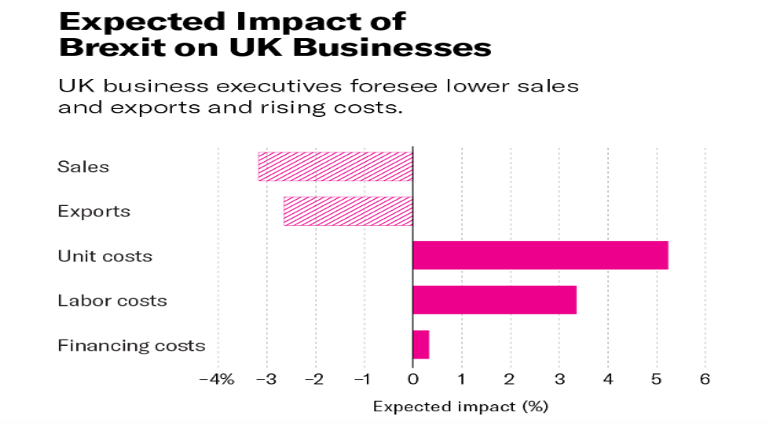
Source: Harvard Business Review
Strategic Issue 2: Diversity/Gender Pay Gap
The disparity in wage distinction between the compensation received by women and men who labor under almost identical conditions with firms in the UK. The compensation disparity exists owing to the prejudice and stereotypical notions held by company executives and owners. According to the survey, women are generally paid less in earnings and wages, resulting in ongoing inequities in gender wage gaps (Bishu & Alkadry, 2017, 65). At the same time, there is a disparity or race at top management at BD Network.
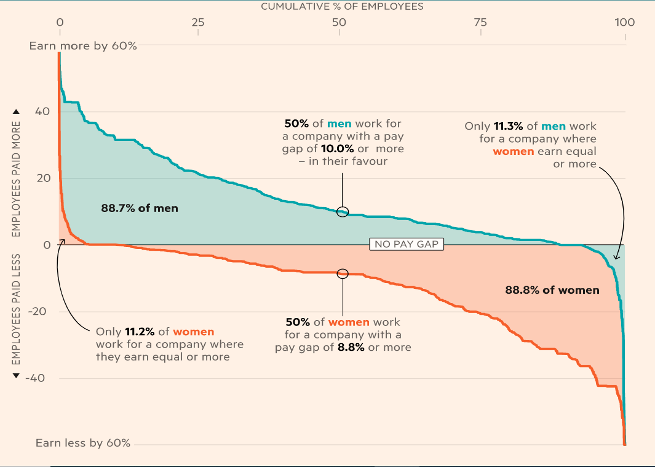
Source: Financial Times https://ig.ft.com/gender-pay-gap-UK/
Challenge 1: Gender Pay Gap
There exists unequal pay between women and men for doing the same job in firms such as BD Network. This has been a prevalent issue in many countries, including the United States and the United Kingdom, where studies have shown that men earn more than women, even after controlling for factors such as skills and experience, education, and hours worked (Vacas‑Soriano, 2021, 2; Office for National Statistics, 2020, np.). The feminist theory seeks to explain and challenge gender inequality, including the gender pay gap, and provides a framework for understanding and addressing this issue (Walby, 2009).
Bennedsen et al. (2019) employ the Bishu & Alkadry (2017) dimension to describe the gender wage disparity in job markets. It investigated the elements contributing to gender wage disparities (Bennedsen et al., 2019). Significant elements in the researchers' efforts to alleviate the difficulty in pay transparency and business results. Fernandes & Ferreira (2021) additionally investigated the pre-crisis heterogeneity in external financial linkages across the Portuguese sectors for the identifications using the employer-employee data.
As per Graf et al., addressing gender pay lessens the likelihood of gender imbalance in the employment industries (2018). The researchers used the frameworks employed to advance pay equality as a guide for reducing the gender pay gap (Graf et al., 2018). The study determined the standards for reducing gender wage inequalities since 1980 using Pew Research methodologies.
Even decades after the Equal Pay Act was passed, women continue to be paid less than men when statistics from other industries, businesses, or even inside the same organization are studied. As a result, research in the literature examines several ideas explaining why the wage gap continues and the quantitative and intangible components that contribute to this phenomenon (Ayisha et al., 2019). Indeed, even using statistical averages, closing the gender pay gap will take approximately 217 years (Ayisha & Schermer, 2019). Two approaches to this widespread issue in the UK include organizational initiatives and a change in attitudes around parental care.
For years, women in the workforce have been concerned about the variance in median wages between men and women compared to male median earnings (Howard et al., 2020). Similar results were reported in the largely male-dominated field of information science (Courey & Heywood, 2018). Similarly, there is an 8% difference in remuneration between the sexes based on information from 24 different institutions (Warner & Lehmann, 2019).
Models and Theories
Feminist Theory and application in workplaces has been widely studied and documented, with research showing that women earn less than men in almost every country and sector (International Labour Organization, 2019). Feminist theory provides a framework for understanding and challenging the gender pay gap by highlighting how gender inequality is maintained and reinforced through social, economic, and political structures and processes. For example, the gender pay gap results from a combination of factors, including discrimination, gendered division of labour, and unequal distribution of power and resources.
Challenge 2: Equity and Diversity.
In order to ensure that everyone has the same rights, responsibilities, and results in the workplace, we need to implement strong and nuanced strategies in their approach to equality and diversity, as Amartya Sen has outlined (Ozbilgin, 2013, 7). These organizational differences are more closely related to human resources planning. Garnero, Kampelmann, and Rycx (2014) investigated the influence of worker diversity on salaries, profitability, and productivity and discovered that HR is driven not only by employees' welfare but also by establishing the best blend in the workplace that may bring together varied abilities to boost the organization's performance. Furthermore, Cho, Kim, & Mor Barak investigated workforce diversity, management, and organizational performance through semistructured, extremely detailed interviews with 14 workers in social enterprise (2017, 2). As a result of the positive that has been achieved in this kind of diversity, advances in ethnic and racial diversity have indeed been accepted in most companies between blacks, Hispanics, or Asians.
Women in BD network’s top management is a driver for development that can enhance a company's success (Triana, Miller, & Trzebiatowski, 2014, 609). Gender diversity, on the other hand, can be a cause of contention in a company, delaying decision-making (Triana et al., 2014, 610). As a result, companies may need more ability to undertake change that is anticipated to enhance organizational performance, particularly if the company has become underperforming. According to Triana et al. (2014), the link between organizational strategy change and gender balance is most good when there is no danger presented on the board regarding bad performance and women have more influence in management.
Theory 1: Diversity and Inclusiveness
Research has shown that despite progress in promoting diversity and inclusiveness, many companies still need to work on creating a truly equitable and inclusive workplace culture. Studies have explored the role that organizational policies and practices, such as diversity training and leadership development, can play in promoting social justice in the workplace One study found that companies that adopt a social justice-oriented approach to diversity and inclusion are more effective in attracting and retaining a diverse workforce and improving employee engagement and job satisfaction (Ng et al., 2020, 1). Another study found that companies that prioritize social justice are more likely to have a positive impact on their bottom line, as well as on their reputation and brand image.
Theory 2: Social Justice Theory
Social justice theory has been applied to address issues such as unequal pay, lack of representation of underrepresented groups, and discriminatory practices. Barrientos et al. (2019) found that implementing social justice initiatives, such as diversity and inclusion training programs, can lead to more inclusive workplace culture and reduce discrimination.
A study by the National Women's Law Center (2021) shows that women in the United States still get only 82 cents for each dollar earned by male colleagues, a gap that has persisted for decades. The study highlights the importance of implementing policies and initiatives that address the gender pay gap and promote fair pay for all workers. Social justice theory in the workplace also addresses the need to represent underrepresented groups in leadership positions. A study by Cox & Blake (1991) found that companies with diverse leadership teams outperform their peers and that diversity in leadership leads to increased innovation and creativity.
Challenge 3: COVID-19
THE UK COVID-19 epidemic has profoundly influenced all spheres of society, including our personal lives, interpersonal connections, and businesses. Project managers have seen a devastating impact on output due to COVID-19 (Bushuyev, 2020). The benefits of managing a staff of remote workers outweigh any initial challenges, including the ability to hire the top candidates for open positions throughout the country (Koch, 2021,1).
Finding a qualified management team for any commercial organization has been harder in the post-pandemic era (Luthra, 2020). The COVID-19 outbreak has forced the project industry to change its working methods (Müller, 2020). It is challenging to incorporate remote labour into the project industry (Koch, 2021). Due to remote working, the project industry now finds it more challenging to sustain flawless performance when completing a task (Suci, 2020). Businesses struggle with risk management challenges as well. The business, in my opinion, significantly depends on human capital (Schermuly, 2021).
Regarding management, Risk-taking, as indexed by the level of R&D activity, is inversely proportional to board meeting frequency and board size; these correlations are stronger in Anglo-Americans than in European nations (AlHares, 2019, 1). Financial institutions, underwriters, and developers all make up the sampled businesses. Board composition and its effect on the company's willingness to take risks are examined (Akbar et al., 2017, 101).
Challenge 4: Brexit
The primary challenge advertising firms face post-Brexit is the potential loss of access to the EU market. The EU market is one of the largest and most lucrative markets in the world, and Brexit may lead to restrictions on trade and increased tariffs that make it more difficult for advertising firms to access this market.
PEST Analysis of Brexit
Political stability or instability
Political hazards exist in any place where BD Holdings does business or engages in commerce. BorgWarner Inc. works in the auto parts industry throughout numerous nations, where it is subject to risks from various political environments and political systems (Malik et al., 2019, 347). Due to the UK's damaged image as a global business destination, many businesses felt the repercussions of Brexit (Peter Goodman, 2019, 1).
Economic Factors
While imagining this ideal situation, it is crucial to consider the trade agreements between the UK and the EU. The Brexit decision also increased UK inflation by around 1.7% in 2017 (Breinlich et al., 2017, 2), costing the typical British family £404 annually. According to Crowley et al. (2019), the effects of Brexit also affected UK trade activities since it decreased the country's global commerce. On backup plans and put off making investments (Graziano, Handley, and Limo, 2021, 1150).
Social Factors
One of the most significant social impacts of Brexit has been changes to immigration policies. The UK's exit from the EU has led to changes in the rights of EU citizens to work and reside in the UK, which has created uncertainty for many workers and businesses (Home Office, 2019). This can impact the workforce and labour market and create challenges for companies in attracting and retaining talent.
Technological Factors
The technical infrastructure of the UK is excellent. However, less enthusiasm for trade in European nations has lessened their governments' interest in spending more on the technology infrastructure for the service industry. Furthermore, it is anticipated that the amount of trade between the EU and the UK will drastically decline due to the strict standards for cross-border trade in products between the UK as well as the EU (Shad, 2021).
Offload drafts to field expert
Our writers can refine your work for better clarity, flow, and higher originality in 3+ hours.
Match with writerReferences
- AlHares, A., Elamer, A.A., Alshbili, I. and Moustafa, M.W., 2020. Board structure and corporate R&D intensity: evidence from Forbes Global 2000. International Journal of Accounting & Information Management.
- Akbar, S., Kharabsheh, B., Poletti-Hughes, J., & Shah, S. (2017). Board Structure and Corporate Risk Taking In the UK Financial Sector. International Review of Financial Analysis, 50, 101-110. https://doi.org/10.1016/j.irfa.2017.02.001
- Ayisha, A. & Schermer, J.A., 2019. Gender pay gap: A cross-sectional study of the effect ofworkplace entitlement on pay differences.Social Behavior Research and Practice -Open Journal, 4(1), pp.15-20
- Bishu, S. G., & Alkadry, M. G. (2017). A systematic review of the gender pay gap and factors that predict it. Administration & Society, 49(1), 65-104. https://journals.sagepub.com/doi/abs/10.1177/0095399716636928
- Breinlich, H., Leromain, E., Novy, D. and Sampson, T., 2017. The Brexit vote, inflation and UK living standards. CEP Brexit Analysis, 11, pp.2-15.
- Bittman, M., Dunlop, Y., Johnson, P., & Saunders, P. (2014). The intersections of gender and race in the labor market. Annual Review of Sociology, 40, 237-257.
- Crenshaw, K. (1991). Mapping the margins: Intersectionality, identity politics, and violence against women of color. Stanford Law Review, 43(6), 1241-1299.
- Crowley, M., Exton, O. and Han, L., 2019. The impact of Brexit uncertainty on UK exports. London: VOX.
- Courey, G., & Heywood, J. S. (2018). Gender wage gap trends among information science workers*. Social Science Quarterly, 99(5), 1805-1820.doi: https://doi.org/10.1111/ssqu.12536
- Graziano, A.G., Handley, K. and Limão, N., 2021. Brexit Uncertainty and Trade Disintegration. The Economic Journal, 131(635), pp.1150-1185.
- Goodman, P., 2019. For Many British Businesses Brexit Has Already Happened. The New York Times, 1.
- Howard, H., Habashi, M., & Reed, J. (2020). The Gender Wage Gap in Research Libraries.College & Research Libraries, 81(4), 662. doi: https://doi.org/10.5860/crl.81.4.662
- Hunt & Wheeler (2018). Brexit: all you need to know about the UK leaving the EU. BBC News Online [online] Available at: https://www.bbc.co.uk/news/uk-politics32810887
- Kentish, B. (2018). Brexit: what is the Northern Ireland backstop, what would it mean and why is it so controversial? Independent News Online, [online] 11 December. Available at: https://uk.news.yahoo.com/brexit-northern-ireland-backstop-mean102800130.html
- Malik, A., Adekoya, O.D., Ajonbadi, H.A. and Jimoh, I., 2019. Investigating the potential economic impact of Brexit decisions on business performance in the United Kingdom: a case study of the UK construction industry. International journal of management, accounting and economics, 6(4), pp.347-367.
- Mustafa F. Ozbilgin, 2013. Equality, Diversity and Inclusion at Work: A Research Companion. pp.7-9. Edward Elgar Pub
- Pollard, J.S., 2018. Brexit and the wider UK economy. Geoforum.
- Shad, M.R., 2021. UK's Post-Brexit Economic Prospects in View of its Trade and Cooperation Agreement (TCA) with the EU. Journal of European Studies (02589680), 37(2)
- International Labour Organization (2019). Global gender pay gap estimated at 16%. Retrieved from https://www.ilo.org/global/about-the-ilo/newsroom/news/WCMS_744858/lang--en/index.htm
- Office for National Statistics (2020). Gender pay gap in the UK: 2020. Retrieved from https://www.ons.gov.uk/employmentandlabourmarket/peopleinwork/earningsandworkinghours/articles/genderpaygapint
- Triana, M. del C., Miller, T. L., & Trzebiatowski, T. M. (2014). The Double-Edged Nature of Board Gender Diversity: Diversity, Firm Performance, and the Power of Women Directors as Predictors of Strategic Change. Organization Science, 25(2), 609–632. https://doi.org/10.1287/orsc.2013.0842
- Vacas‑Soriano, Carlos; Hurley, John; Bisello, Martina (2021). Understanding the gender pay gap: What role do sector and occupation play? Eurofound. https://www.eurofound.europa.eu/publications/policy-brief/2021/understanding-the-gender-pay-gap-what-role-do-sector-and-occupation-play
- Warner, A. S., & Lehmann, L. S. (2019). Gender wage disparities in medicine: time to close the gap. Journal of General Internal Medicine, 34(7), 1334-1336. https://doi.org/10.1007/s11606-019-04940-9
