




- Tailored to your requirements
- Deadlines from 3 hours
- Easy Refund Policy
Abstract
Innovations in contemporary society enhance consumers' quality of life. The adoption of electric vehicles is one such impact of innovation. Several decades passed, especially in the earlier stages of the automotive industry, and the manufacture of electric vehicles was thought to be impossible. However, various companies currently integrate their manufacturing. The consumer preference for electric vehicles has grown over the past decades, leading to their popularity over gas cars. It is imperative to note that while gas cars were initially praised for their convenience and ease of use, the design of EVs is easier to maintain, creating a sense of urgency in consumer adoption. In the same line of thought, given the impacts of emissions on the environment and global warming, EVs have become a safe preference for consumers, given their environmental protection and sustainability enhancement. EVs are the preferred choice over gas cars for contemporary consumers due to their efficiency, technological modifications, and cost-effectiveness. Therefore, it is better to acquire an electric vehicle over a gas car when purchasing vehicles, given its several benefits to consumers.
Introduction
Innovation creates an avenue for contemporary lives to be more manageable. One improvement due to innovation is the development of electric vehicles. Since the onset of the motor vehicle industry, the fuel-driven economy has been the production standard. However, various companies are producing electric vehicles, making it easier for consumers who are buying or driving gas vehicles to adopt EVs (Bordes et al., 2022). There are several controversies regarding adopting electric vehicles over gas cars, as arguments by the proponents of each justify their relevance. However, the world and electric vehicle technology are changing (Bordes et al., 2022). Sooner or later, a significant part of the population and the automotive industry will adjust to electric vehicles. In the current society, arguments for gas cars may suffice for their use; however, the broad adoption of EVs has increased their popularity, progressing toward making gas cars obsolete. Electric vehicles are efficient and enhance sustainability practices while also being economical to the buyers, as opposed to the possible lack of environmental friendliness in using gas cars. Electric vehicles have better advantages in their use than gas vehicles.
Electric vehicles have a significant advantage of being environmentally friendly. The environment faces various forms of destruction from climate change induced by human activities. A primary construct of climate change is global warming, which is linked to releasing gas fumes into the environment, destroying the ozone layer, and leading to increased global temperatures (Costa et al., 2022). Gas cars emit fumes into the environment that contribute to the impacts of global warming. By adopting or driving an electric vehicle, the emissions to the environment are significantly lowered. Electric cars do not emit toxic fumes into the environment, leading to a decrease in pollution and the impact of global warming (Sethu et al., 2022). EVs reduce vehicle emissions to the environment, enhancing the accomplishment of sustainability goals. As a benefit of electric vehicles over gas cars, the former enhances environmental protection.
Electric cars are easier to maintain and thus cost-efficient. Factors that govern consumer behavior in purchasing automotive vehicles include the ability to incur low maintenance costs (Ortar & Ryghaug, 2019). EVs offer an avenue for cheaper maintenance as the industries responsible for their manufacture provide the consumers with charging ports free of charge (See appendix figure 1.0) (Noblet, 2022). In the same line of thought, the charging process of EVs is relatively quicker (Ucer et al., 2019). The design of electric vehicles eliminates the complexities of gas cars, such as oil, combustion engines, and brake wear that require regular maintenance. The consumer can incur low maintenance costs when using electric vehicles, as some gas car parts are non-existent (Abraham et al., 2021). Notably, if fewer maintenance areas exist, EVs are also cost-efficient in services. The charging ports in EVs are also relatively inexpensive compared to the oil requirements of a fuel-driven economy (Greene et al., 2020). In this context, with the free charging ports, lower requirements for operations, and lower maintenance and servicing costs, it is better to drive electric vehicles than gas cars, as they are cost-efficient.
There are existing benefits accorded to consumers in the use of electric vehicles. While the overall goal of adopting EVs is the achievement of environmental sustainability goals and the efficiency of use, EVs experience additional benefits. For instance, government and company incentives for EV use enhance the quality of life of their users (Munzel et al., 2019). The government provides tax credits from the federal and state governments for purchasing, adopting, or using EVs, enabling and making their acquisition relatively cheaper. Initiatives like the California Clean Fuel Reward Program offer consumers rebates for purchasing electric vehicles (Trencher, 2020). Additionally, EV companies offer customized benefits to their users that are not common among gas cars, such as reduced tolls and parking spaces, all of which ease consumer experience and enhance their quality of life (See Appendix Figure 1.1) (Stradling 2023). Therefore, driving or buying an electric vehicle provides substantial benefits and experience to the consumer compared to gas cars.
Electric vehicles are also more efficient and designed for comfort and silence than gas cars. It is imperative to note that the efficiency of gas cars' engines relative to the output is lower than that of electric vehicles (Husain et al., 2021)—factors such as heat emission and friction factor in fuel use and thus lower both the output and efficiency. On the flip side, the design of EV batteries and their synchronization with vehicle operations enables the use of a significant amount of stored energy (Husain et al., 2021). Electric vehicles are, therefore, more efficient than gas cars.
Regarding comfort, companies like Tesla are integrating artificial intelligence in the design of their EVs, congruent with the needs of contemporary society in technological adjustment and improvements (Patil & Khairnar, 2021). The self-driving cars and enhanced safety mechanisms enable consumers to experience luxury comfort. Likewise, the absence of an internal combustion engine in electric vehicles provides a silent drive, enabling consumers to enjoy quiet maneuvers on the roads and highways without noise pollution (Patil & Khairnar, 2021). Buying or driving electric vehicles is thus essential in providing a silent drive, luxury, and comfort that gas cars do not provide.
The arguments against electric vehicles that suffice as support for gas cars are the charging times and limited range (Chaitra et al., 2023). With fuel, proponents of gas cars argue that movement is unlimited; however, electric cars have to stop and charge (Chaitra et al., 2023). In the same line of thought, stopping to charge electric vehicles is relatively time-consuming. In defense of EVs, the companies design battery storage units with an excellent capacity for sustainability (Chaitra et al., 2023). Additionally, there will soon be several charging areas for EVs, enhancing access and sustainability in movement.
Put your paper in expert hands
Get a custom essay written to your exact requirements – researched, structured, and delivered on time.
Write my essayConclusion
Electric vehicles are better than gas cars for a variety of reasons. EVs are the future for consumers, and a significant part of the population is switching to EVs for convenience and adaptability. Given the low environmental emissions, EVs are more environmentally friendly than gas cars. Buying or driving EVs provides consumers with a silent drive. EV companies and the federal government also give consumers rebates and tax incentives. The consumer's experience is also heightened to meet the standards of quality that improve their individual lives. Additionally, the efficiency of EVs is also more than gas cars. In conclusion, driving or buying electric cars is better than gas cars.
Appendix
Figure 1.0 (Noblet, 2022).
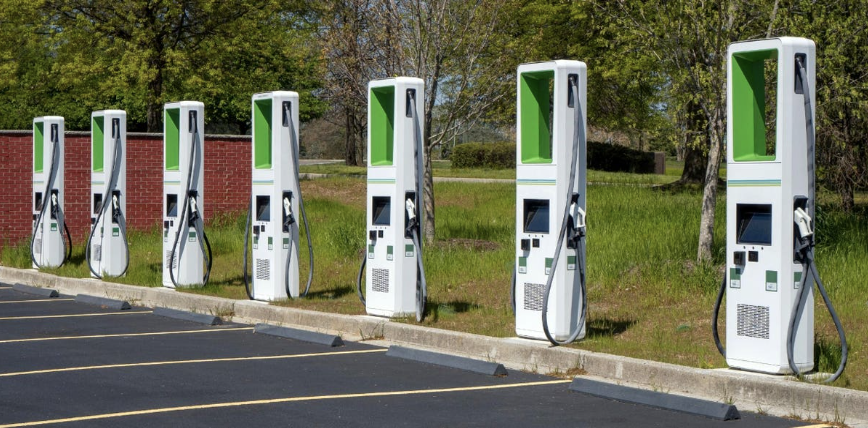
Figure 1.1 (Stradling, 2023). 
Offload drafts to field expert
Our writers can refine your work for better clarity, flow, and higher originality in 3+ hours.
Match with writerReferences
- Abraham, S. D., Verma, R., Kanagaraj, L., Giri Thulasi Raman, S. R., Rajamanickam, N., Chokkalingam, B., & Mihet-Popa, L. (2021). Electric vehicle charging stations' architectures, criteria, power converters, and microgrid control strategies. Electronics, 10(16), 1895. https://doi.org/10.3390/electronics10161895.
- Bordes, A., Danilov, D. L., Desprez, P., Lecocq, A., Marlair, G., Truchot, B.,... & Lamontarana, S. (2022). A holistic contribution to fast innovation in electric vehicles: An overview of the DEMOBASE research project. ETransportation, 11, 100144. https://doi.org/10.1016/j.etran.2021.100144.
- Chaitra, G. D., Suchitra, M., YL, C., & SR, B. (2023). Analysis of Batteries Used in Electric Vehicles. Tuijin Jishu/Journal of Propulsion Technology, 44(5), 2774-2781. https://doi.org/10.52783/tjjpt.v44.i5.3023.
- Costa, E., Wells, P., Wang, L., & Costa, G. (2022). The electric vehicle and renewable energy: Changes in boundary conditions that enhance business model innovations. Journal of cleaner production, p. 333, 130034. https://doi.org/10.1016/j.jclepro.2021.130034.
- Greene, D. L., Kontou, E., Borlaug, B., Brooker, A., & Muratori, M. (2020). Public charging infrastructure for plug-in electric vehicles: What is it worth? Transportation Research Part D: Transport and Environment, 78, 102182. https://doi.org/10.1016/j.trd.2019.11.011.
- Husain, I., Ozpineci, B., Islam, M. S., Gurpinar, E., Su, G. J., Yu, W.,... & Sahu, R. (2021). Electric drive technology trends, challenges, and opportunities for future electric vehicles. Proceedings of the IEEE, 109(6), 1039-1059. https://doi.org/10.1109/JPROC.2020.3046112.
- Münzel, C., Plötz, P., Sprei, F., & Gnann, T. (2019). How large is the effect of financial incentives on electric vehicle sales? –A global review and European analysis. Energy Economics, 84, 104493. https://doi.org/10.1016/j.eneco.2019.104493.
- Noblet, S. (2022, November 21). Improving EV Charging Infrastructure For All. Forbes. https://www.forbes.com/sites/stacynoblet/2022/11/18/improving-ev-charging-infrastructure-for-all-takeaways-from-greenbiz-groups-verge-22/?sh=52ea0da87367.
- Ortar, N., & Ryghaug, M. (2019). Should all cars be electric by 2025? The electric car debate in Europe. Sustainability, 11(7), 1868. https://doi.org/10.3390/su11071868.
- Patil, L. N., & Khairnar, H. P. (2021). Investigation of human safety based on pedestrian perceptions associated with the silent nature of electric vehicles. https://doi.org/10.5109/4480704.
- Sethu, D. S., Sheng, H. K., & Marican, K. (2022). Impact of EVs on global warming. https://commons.erau.edu/cgi/viewcontent.cgi?article=1031&context=ww-research-methods-rsch202.
- Stradling, R. (2023, March 23). It may be rude, but should it be illegal for gas cars to park in EV charging spaces? Yahoo News; Yahoo News. https://news.yahoo.com/may-rude-illegal-gas-cars-100000155.html.
- Trencher, G. (2020). Strategies to accelerate the production and diffusion of fuel cell electric vehicles: Experiences from California. Energy Reports, pp. 6, 2503–2519. https://doi.org/10.1016/j.egyr.2020.09.008.
- Ucer, E., Koyuncu, I., Kisacikoglu, M. C., Yavuz, M., Meintz, A., & Rames, C. (2019). Modeling and analysis of a fast charging station and evaluating service quality for electric vehicles. IEEE Transactions on Transportation Electrification, 5(1), 215-225. https://doi.org/10.1109/TTE.2019.2897088.
