




- Tailored to your requirements
- Deadlines from 3 hours
- Easy Refund Policy
Purpose and Aims of Unilever 3
Brief History and Current Global Presence 3
Internal Resources, Capacities, and Operating Environment Analysis 4
Internal Resources and Capacities of Unilever 4
Financial Strength and Brand Portfolio 4
Innovation and R&D Capabilities 5
Global Reach and Localization Strategy 5
Position in Operating Environment 6
Market Trends and Consumer Behavior 6
Economic and Regulatory Factors 7
Strategic Challenge Identification 8
Initial Thoughts on Addressing the Challenge 9
Introduction
Unilever Plc is a multinational company operating in the production and marketing of fast-moving consumer goods. Since its inception in 1929, the company has remained one of the biggest and most diverse multinational consumer goods companies in the world through the provision of a vast array of products in the food, beverages, home, and personal care segments. With headquarters in London, Unilever operates in more than 190 countries, reaching billions of consumers globally with well-known brands like Dove, Knorr, and Magnum. Despite its strong market position, Unilever faces a rapidly changing world. Consumer preferences are shifting, sustainability concerns are growing, and new competitors are emerging. These factors create both opportunities and threats for the company. As such, this report will explore Unilever's internal resources and market environment. It will identify a key strategic challenge the company faces and suggest potential ways to address it. By looking at Unilever through the lens of strategic management theories, it can be pointed out how large multinationals navigate complex business landscapes.
Organization Description
Purpose and Aims of Unilever
Unilever PLC is a key player in fast-moving consumer goods. According to Global Data (2022), Unilever manufactures and supplies fast-moving consumer goods across three main categories: Food & Refreshments, Home Care, and Beauty & Personal Care. The company's product portfolio includes well-known brands such as Ben & Jerry's, Dove, Axe, Lifebuoy, and Knorr (Unilever, 2024). Unilever's purpose is to make sustainable living commonplace and create a positive social impact while delivering strong business performance. The company's objectives are to strengthen livelihoods throughout its value chain, lessen its environmental impact, and boost the health and well-being of almost one billion individuals (Reza, 2020). With its diverse product range and commitment to sustainability, Unilever strives to meet consumer needs while addressing global challenges in the fast-moving consumer goods industry.
Brief History and Current Global Presence
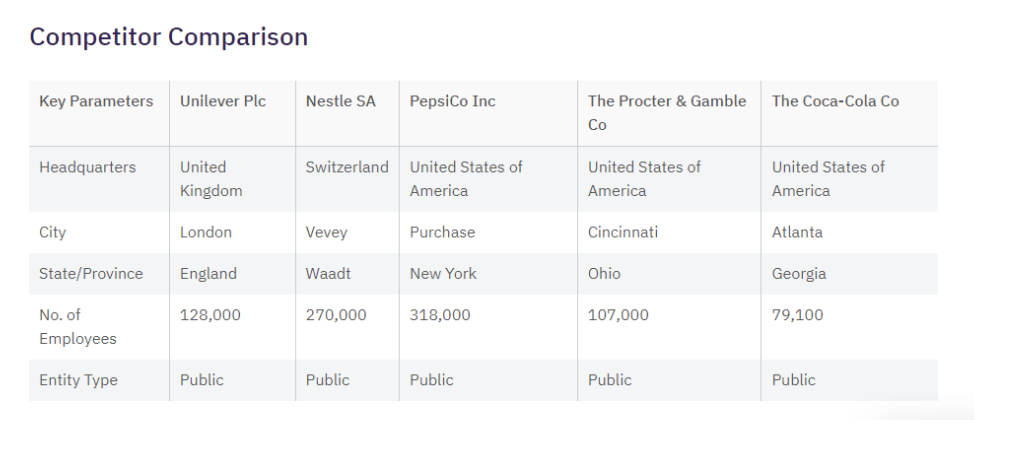
Unilever Company was formed in 1930 as a result of the fusion of Lever Brothers, a British company that specialized in soap production, and Margarine Unie, a Dutch company that dealt in margarine production. Businesses were vying for the same raw resources, both were heavily promoting home goods, and both made use of the same distribution methods. They operated in more than 40 countries together. In the 1920s, Margarine Unie expanded through acquisitions with other margarine businesses. Since the merger, Unilever has expanded organically and via acquisitions to become one of the biggest consumer goods corporations in the world. As of 2022, Unilever operates in over 190 countries, and its products are used by 2.5 billion people daily (Reza, 2020). The company employs approximately 128,000 people globally and generated revenues of $64.5 billion in 2022 (Global Data, 2022b). Unilever has a strong presence in emerging markets, which account for 58% of its business. The company's scale and global reach allow it to leverage efficiencies in manufacturing and distribution while diversifying risks across markets (Unilever, 2024). Unilever continues to focus on sustainable growth and innovation to maintain its position as a leader in the competitive consumer goods industry.
Internal Resources, Capacities, and Operating Environment Analysis
Internal Resources and Capacities of Unilever
Financial Strength and Brand Portfolio
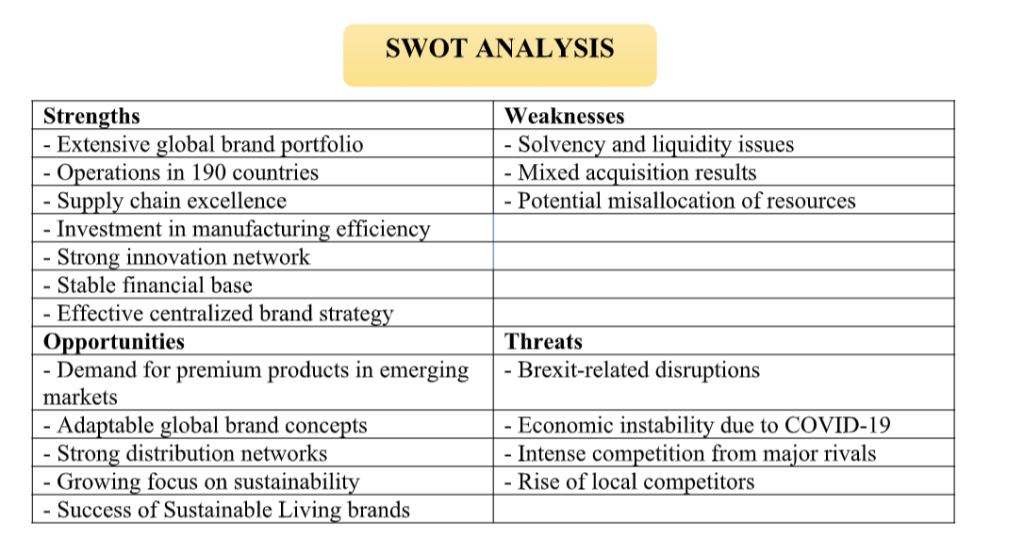
Unilever demonstrates considerable financial strength and a diverse brand portfolio that serves as a key internal resource. According to Cheng (2021), Unilever's total assets have remained financially stable and increased in line with operational requirements. The company's strong financial position is supported by eight major financial departments, including an excellent finance team, supply chain finance, and taxation units. This robust financial infrastructure enables Unilever to effectively manage its global operations across 190 countries. Moreover, Unilever has a vast brand portfolio that is an important asset to the company. It consists of more than 400 brands, with 13 of these brands making more than one billion Euros in sales annually (Unilever 2024). The company’s strategic focus on brand consolidation has been very successful since by the year 2008, eighty percent of Unilever’s sales were coming from just twenty percent of its core brands after reducing the number of its brand portfolio from over two thousand in the early 2000s to four hundred, thereby significantly enhancing control over brands and improving their management efficiency (Cheng 2021). Through this strategic brand consolidation and strong financial footing, the company was able to position itself as a key player in the global consumer goods industry and effectively utilize its resources for continued growth and innovation across various product categories.
Innovation and R&D Capabilities
Unilever’s research and development (R&D) capabilities represent an additional important internal resource. Unilever’s R&D vision is centered on building brands through benefit-led innovation grounded in science and technology (Unilever, 2024). This dedication to innovation is apparent in how Unilever sees the inclusion of suppliers in the product development process. Unilever has fine-tuned its leveraging approach to include more than 10,000 suppliers as an innovation resource (Laursen & Andersen, 2023). The firm has steered clear of traditional supplier-driven competitions for innovation towards a more democratized and inclusive governance model that promotes communal innovation through structured engagements and workshops with suppliers. By embracing this strategy, the company can harness different external know-how as well as resources that enhance its creativity.
Global Reach and Localization Strategy
Unilever has significant organizational capacities due to its global presence and localization strategy. According to Cheng (2021), the company operates in more than 190 countries, reaching out to 2.5 billion customers every day. Having such a broad global footprint helps Unilever diversify risks and provide predictable long-term returns. Furthermore, Unilever employs a powerful localization approach by making product adjustments and adapting operations for different regions. In addition, Unilever focuses on discovering and nurturing local executive talent that promotes everything from “Australiaization” to “Indianization”, as described by Cheng (2021). It is through this means that the company can best understand what consumer wants in various markets, thus becoming more competitive.
Position in Operating Environment
Competitive Landscape
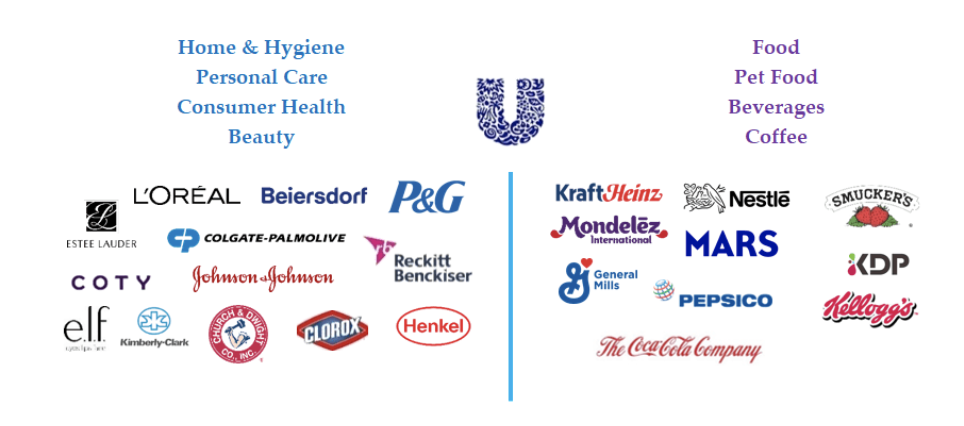
Unilever is a player in an FMCG market that is highly competitive and fast-moving. As Reza (2020) observes, Unilever faces stiff rivalry from other cosmetics and toiletries giants such as Procter & Gamble and L'Oréal. These competition-fueled rivals dedicate huge sums of money to new product creation and quickly respond to market shifts. For the company to maintain its market position, the competitive environment requires continuous innovation and strategic brand management by Unilever. Iglesias et al. (2023) argue that many stakeholders are pressuring businesses as well as their corporate brands towards accepting their broader responsibilities beyond financial gain. Consequently, the nature of competition has changed across several industries, especially those in b2b settings. This intense rivalry highlights why Unilever seeks to make its products different from others while at the same time working on maintaining strong brand loyalty to protect and expand its major portion of this global market.
Market Trends and Consumer Behavior
Unilever operates in a dynamic and evolving marketplace where consumers are increasingly seeking sustainable and healthier products. According to Reza (2020), Unilever has upped its focus on Sustainable Living brands that deliver significant social or environmental benefits. It is in line with the growing demand for eco-friendly, health-conscious products by consumers. The company’s responses, such as achieving zero non-hazardous waste in landfills in 2017, can be seen as part of the initiatives taken to address these market trends (Hussain et al., 2021). As such, Unilever’s proactive approach in relating its product offerings and systems with these new consumer preferences as they unfold plays a key role in positioning the company so well for capitalizing on changing market dynamics.
Economic and Regulatory Factors
Unilever is vulnerable to different economic and regulatory challenges in its operations. This has seen the company facing potential risks of economic downturns, as witnessed in the global economic depression caused by the COVID-19 pandemic (Cheng, 2021). Moreover, Unilever operates in numerous countries with varying regulatory frameworks, hence it must take into consideration local laws and regulations. The current situation regarding Brexit, as well as trade agreements between the UK and European nations, may also pose a threat to Unilever operations (Cheng, 2021). These economic and regulatory factors highlight the need for a flexible and adaptive business strategy from Unilever that would help mitigate risks as well as exploit opportunities across its multiple diverse global markets.
Strategic Challenge Identification
One of the main challenges facing Unilever is to grow while remaining sustainable in a very competitive global market. According to Cheng (2021), Unilever operates in a highly saturated industry with low barriers to entry, facing fierce competition from both international companies and local brands across its 190 markets. To maintain its market position, it has to keep on expanding, specifically in emerging markets. However, this growth imperative goes against the company’s strong desire for sustainability and social responsibility. The importance of sustainability for Unilever’s success has been illustrated in Reza (2020) by informally stating that Sustainable Living brands grew 50% faster than those outside it in 2016. It is a typical demonstration of the stakeholder theory of strategic management that pits growth against sustainability, where companies must balance several stakeholders’ interests for long-term success (Bridoux & Stoelhorst, 2022).
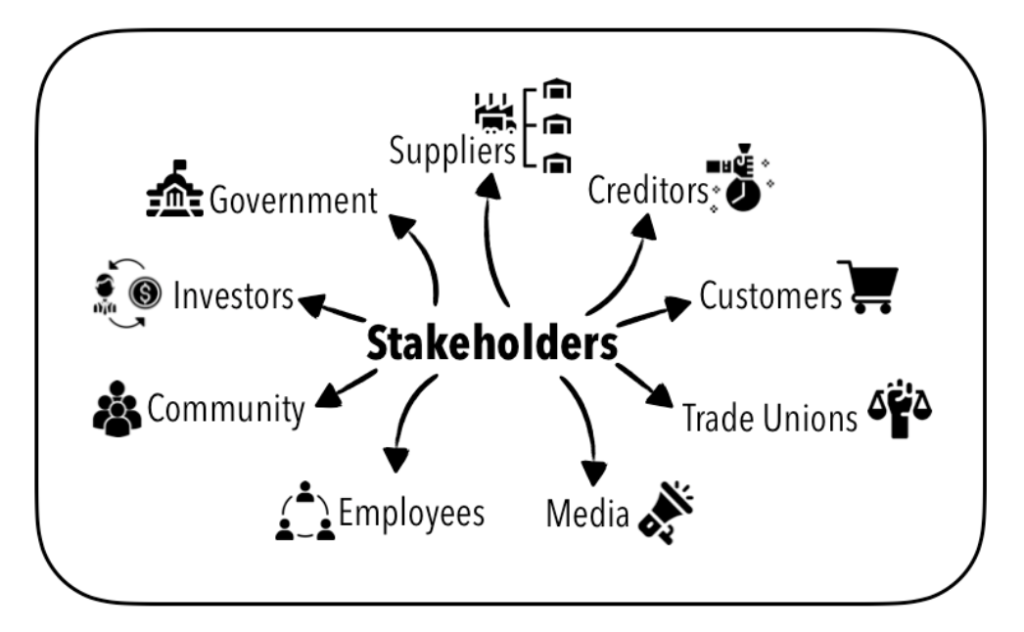
Figure 2: Stakeholder Theory
This implies that Unilever must balance what shareholders expect of it in terms of financial growth against the notion that consumers assume it will behave in an environmentally and socially responsible manner. Furthermore, the task is made more difficult by the necessity to introduce new and unusual products in a low-differentiated industry, as Laursen and Andersen (2023) suggested in their review of Unilever’s supplier innovation practices. There is thus a need to address this multifaceted challenge if Unilever is to survive and remain competitive within the global FMCG market.
Initial Thoughts on Addressing the Challenge
To tackle the strategic challenge of reconciling growth and sustainability, there are several approaches that Unilever may want to consider. According to Reza (2020), the business has had some successes with its Sustainable Living brands that outperformed other product lines. On this basis, Unilever might integrate sustainability better into its principal business strategies, perhaps by setting more ambitious environmental goals and eco-friendly innovations across all its products in a portfolio. Furthermore, as Laursen and Andersen note (2023), the company can also make good use of its innovation power to develop even “greener” products as well as packaging options. This is consistent with the resource-based view of strategy, which highlights the importance of unique internal resources for obtaining competitive advantage. However, significant resources may be required to implement these strategies, and they may face barriers along the way. Cheng (2021) states that Unilever operates in a highly competitive industry characterized by low-profit margins, which limit its ability to invest in sustainability initiatives. The company may need to carefully balance short-term financial performance with long-term sustainability goals to satisfy shareholders.
Conclusion
To conclude, Unilever has a critical strategic challenge of bringing together growth and sustainability amidst intense global competition. Its various brand portfolios, global presence, and commitment to sustainability are key strengths, albeit it should maneuver through the changing consumer preferences, macroeconomic uncertainties, and regulatory challenges. This is an issue that needs to be solved if Unilever is to sustain itself and be relevant in the FMCG industry in the long run. In the same way, through effective use of the company’s resources, primarily R and D potential and successful Sustainable Living brands, Unilever can more purposefully advance the integration of sustainability into organizational operations. However, the execution of this approach has to be done with a balance concerning available resources as well as external audiences’ anticipation. Lastly, Unilever’s capabilities of being innovative and adaptive will define the company’s future in the fast-growing consumer goods industry.
Appendices
Appendix B
Put your paper in expert hands
Get a custom essay written to your exact requirements – researched, structured, and delivered on time.
Write my essayAppendix C
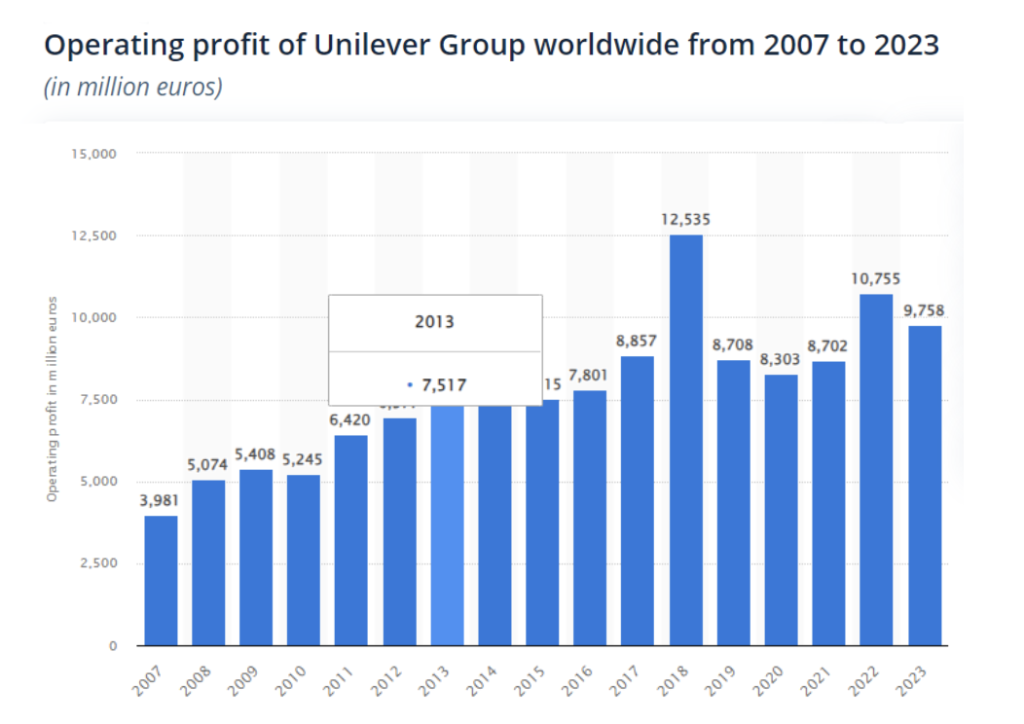
Global operating profit of Unilever 2023
Offload drafts to field expert
Our writers can refine your work for better clarity, flow, and higher originality in 3+ hours.
Match with writerReferences
- Bridoux, F. and Stoelhorst, J.W., 2022, Stakeholder theory, strategy, and organization: Past, present, and future. Strategic Organization, 20(4), pp.797-809. https://doi.org/10.1177/14761270221127628
- Global Data 2022, Unilever Plc: Overview. [online] www.globaldata.com. Available at: https://www.globaldata.com/company-profile/unilever-plc-gd33882/.
- Hussain, C.M., Singh, S. and Goswami, L. eds., 2021, Emerging trends to approaching zero waste: Environmental and social perspectives. Elsevier.
- Iglesias, O., Mingione, M., Ind, N., & Markovic, S. (2023). How to build a conscientious corporate brand together with business partners: A case study of Unilever. Industrial Marketing Management, 109, 1-13. https://doi.org/10.1016/j.indmarman.2022.12.008
- Laursen, L.N. and Andersen, P.H., 2023. Resource and supplier interaction in network innovation governance: the case of innovating at Unilever. Journal of Business Research, 156, p.113465. https://doi.org/10.1016/j.jbusres.2022.113465
- Reza, M.H., 2020, Marketing strategy and sustainable plan of Unilever. International Journal of Scientific Research and Engineering Development, 3(4), pp.680-692.
- Unilever 2024, Unilever at a Glance. [online] Unilever. Available at: https://www.unilever.com/our-company/at-a-glance/.
- Cheng, Y., 2021, February. Analysis on the Opportunities and ofallenges of Unilever’s Differentiated Competition by Using SWOT and PEST. In 6th International Conference on Economics, Management, Law and Education (EMLE 2020) (pp. 280-284). Atlantis Press.
- Appendix A: Unilever’s Competitors
